Autism Awareness Day Collection Clipart Review
First Impressions of a Thoughtful Design Set
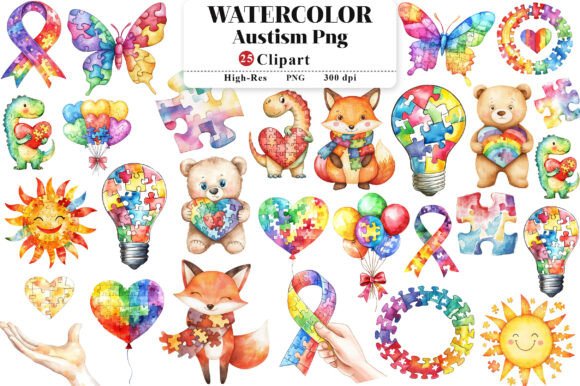
When I first opened the Autism Awareness Day Collection Clipart, I immediately noticed the care put into the visual language. The 25 PNG files feel cohesive without being repetitive, and the transparent backgrounds at 300 dpi tell me someone thought about real-world usability. For an embroidery designer like me, that matters. A lot of design assets look pretty on screen but fall apart the moment you try to turn them into a machine embroidery design. This collection strikes a different chord. The motifs carry a gentle, inclusive energy that would translate beautifully onto fabric, and the 12 x 12 inch canvas gives plenty of room to scale elements up or down without losing integrity.
What I appreciate most is the balance between symbolic imagery and decorative appeal. The puzzle piece motifs, heart shapes, and awareness ribbons are rendered with a softness that avoids looking clinical or overly literal. That matters when you are building a finished product someone will actually wear or gift. You want the message to be clear, but you also want the design to feel like art. This collection walks that line well.
From Digital Clipart to Embroidery Reality
Let me be honest about something many crafters overlook. A PNG file is not an embroidery file. You cannot simply load one of these into your machine and start stitching. What you get here is a strong foundation, a clean, high-resolution graphic that you or a digitizer can convert into a digital embroidery file with proper stitch mapping. The quality of the source artwork directly affects how good the final embroidery project looks, and the crisp edges and solid shapes in the Autism Awareness Day Collection Clipart make that conversion process smoother than many other clipart sets I have tested.
When I evaluate a design asset for embroidery, I look at how the shapes will behave under thread. Will thin lines disappear? Will dense color blocks turn into stiff patches? Will small details blob together? Based on what I see in this collection, most of the designs lean toward clean, open silhouettes that would digitize well as fill stitch or satin stitch applications. A few pieces have finer decorative elements that would need careful stitch density adjustment, but nothing that screams trouble. The transparent backgrounds are a huge time-saver because I can layer these graphics directly into my digitizing software without tedious background removal.
A Real Project Walkthrough
Last week, a client asked me to create a custom embroidered tote bag for an autism awareness fundraiser. She wanted something heartfelt but not overly sentimental, something people would actually carry around after the event. I pulled up the Autism Awareness Day Collection Clipart and started experimenting with placement. One design in particular, a circular composition with interlocking shapes and a subtle ribbon element, caught my eye. I scaled it down to fit an 8-inch hoop, adjusted the thread colors to match the client's brand palette, and ran a test stitch on a medium-weight cotton canvas.
The result convinced me. The design stitched out with clean definition, and the shapes read clearly even from a few feet away. The tote bag design felt intentional, not like a rushed iron-on knockoff. My client loved it, and the bags sold out at the fundraiser within two hours. That is the kind of real-world outcome that makes me trust a design asset. It is not just about looking good on a screen. It is about holding up under the needle, surviving a wash cycle, and making someone feel proud to carry it.
Where This Design Set Shines Brightest
After working with several pieces from the collection, I can confidently say the Autism Awareness Day Collection Clipart fits a broad range of embroidery project types. Here is where I believe it performs best:
- Custom apparel like sweatshirts and t-shirts. The designs have enough visual weight to stand out on a chest or back placement without overwhelming the garment.
- Embroidered patch production. Several motifs are naturally suited for patch borders, and the circular compositions make perfect patch shapes.
- Tote bag design and canvas pouches. The flat, sturdy fabric surface takes these designs beautifully.
- Baby embroidery on onesies and small blankets. The gentle, hopeful imagery feels appropriate for children's items.
- Pillow covers and home decor accents. The awareness theme translates well into nursery decor and cozy living spaces.
- Aprons and kitchen textiles. A subtle awareness ribbon or heart motif on a handmade product like a tea towel adds meaning without being loud.
- Craft business inventory for Etsy seller shops and small shop product lines. The theme has year-round relevance, not just April.
What makes these graphics work across so many applications is the clear readability of the shapes. Even when scaled down for a cap or a baby bib, the core symbolism remains intact. That is not always true with clipart sets, and it deserves mention here.
When to Proceed With Caution
No design asset works everywhere, and I would be doing you a disservice if I did not point out some limitations. The Autism Awareness Day Collection Clipart is versatile, but certain situations demand extra care. Small hoop sizes under 4x4 inches will struggle with the more detailed pieces. If you are working on a cap or a curved surface, stick to the simpler, bolder motifs and leave the intricate compositions for flat fabric.
Textured fabric like terry cloth, fleece, or loosely woven linen can distort fine details. Test your stitch density on a swatch before committing to a full project. Dark fabric requires thoughtful thread color contrast, and some of the lighter pastel tones in the original artwork may need to be reinterpreted in thread. I always recommend running a black and white mockup to check how the design reads in high contrast. If it still works without color, you have a strong design.
Stretchy fabric like jersey or performance wear needs the right stabilizer and possibly a lighter stitch count to avoid puckering. Layered garments with seams under the embroidery area can throw off registration, so plan your placement carefully. And if you are making holiday embroidery gifts or items that will see frequent washing, pay attention to how the fill stitch areas hold up over time. A dense fill on a thin garment can feel stiff and uncomfortable. Dial it back where comfort matters.
How This Clipart Elevates Product Value
From a business perspective, using the Autism Awareness Day Collection Clipart as a design foundation can genuinely increase the perceived value of your handmade product. Customers recognize intentionality. When they see a well-executed awareness design on a personalized gift or a custom apparel piece, they associate it with quality and care. That emotional connection translates into higher buyer engagement, better reviews, and repeat customers.
For Etsy seller shops and craft business owners, this collection offers a way to build a cohesive product line around a meaningful theme. You can use the graphics across multiple items, from sweatshirt embroidery to baby embroidery sets, creating a recognizable brand look. Printable mockup previews also benefit from the clean, high-resolution files. When your listing images look professional, customer trust rises before they even click add to cart.
Giftability is another factor. An embroidered pillow cover or a tote bag design featuring these awareness motifs feels personal and thoughtful. It is the kind of item someone buys for a friend, a family member, or a teacher, not just for themselves. That emotional buying trigger is powerful in the handmade market, and this clipart collection taps into it naturally.
Practical Designer Notes From the Stitching Table
After years of turning graphics into embroidery, I have a mental checklist I run through before committing to any design assets. Here is what I would recommend if you plan to use the Autism Awareness Day Collection Clipart in your own embroidery project workflow:
- Always test on scrap fabric first. The same design can behave differently on cotton, denim, and knit.
- Check thread color contrast against your chosen fabric. What looks great on white canvas may disappear on heather gray.
- Review stitch density carefully. Overly dense fills create stiffness and can distort the fabric.
- Confirm your hoop size accommodates the scaled design with adequate margins.
- Inspect small details before digitizing. Simplify or enlarge anything that risks becoming a thread blob.
- Test the design in black and white mockups to verify shape readability.
- Compare how the motif looks on light and dark fabric backgrounds before making final thread choices.
- Use proper stabilizer for your fabric type. Cut-away for knits, tear-away for wovens, and always test.
- Check whether the design works for both personal and commercial embroidery projects. Licensing terms for the clipart itself must be confirmed with the seller before you sell finished items or redistribute digitized versions.
One thing I particularly value about this collection is the 12 x 12 inch print-ready size. That generous canvas means I can pull a small detail from a larger composition and use it as a standalone applique design or accent element. A single puzzle piece or a tiny heart extracted from the main graphic can become a beautiful running stitch detail on a cuff or collar. That kind of flexibility extends the usefulness of the set far beyond the obvious applications.
Who Should Consider This Collection
If you are an embroidery designer, a small shop product creator, or a craft business owner looking to add meaningful awareness-themed items to your lineup, the Autism Awareness Day Collection Clipart is a solid investment. It is not an embroidery file you can stitch immediately, but it is a high-quality starting point that will save you hours of design work. The 25 PNG files at 300 dpi with transparent backgrounds give you the raw material to create something genuinely beautiful.
For digital product sellers and printable mockup creators, the ready-to-print format opens up additional possibilities beyond embroidery. You can use these graphics for sublimation, screen printing, or paper crafts, though my focus here remains firmly on stitched applications. The collection fits neatly into a workflow that values both creativity and efficiency, and that balance is what I look for in any design assets I recommend.
The Autism Awareness Day Collection Clipart does not try to do everything. What it does, it does with a quiet confidence that makes the designer in me genuinely excited to plan the next personalized gift, the next embroidered patch, the next sweatshirt embroidery that will carry a message worth stitching. And in a market flooded with generic clipart, that kind of focused quality deserves recognition.