I Just Want to Drink Coffee and Pet My Cat
First Impressions: A Cozy Statement in Thread
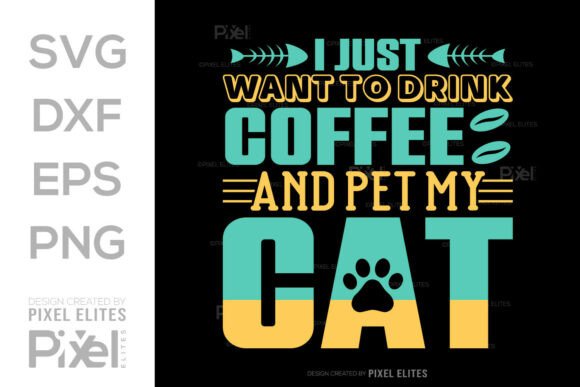
When I first opened I Just Want to Drink Coffee and Pet My Cat, I immediately felt the relaxed, unapologetic comfort it radiates. The design is built around a simple yet deeply relatable sentiment, the kind of phrase that stops a cat lover mid-scroll at a craft fair or on an Etsy listing. The words are arranged with a playful sense of rhythm, and the lettering has a soft, slightly whimsical feel that avoids being overly cute. It leans into a hand-drawn warmth, making it feel personal rather than mass-produced. From an embroidery designer’s perspective, the mood is clear: this is a design meant for quiet mornings, steaming mugs, and a purring feline curled up nearby. It’s not trying to be loud or trendy; it’s aiming for that everyday, heartfelt connection that makes a handmade product feel like a tiny hug.
The visual personality of the piece is friendly and inviting. The shape of the letterforms, the spacing, and any subtle decorative accents (like a small coffee cup, a paw print, or a curled cat silhouette) all work together to create a sense of balance. When I evaluate a Graphics file like this for embroidery, I’m not just looking at how it appears on a screen. I’m imagining how those lines will translate into thread, how the curves will hold up under a needle, and whether the overall composition will still read clearly after it’s been stitched onto a textured surface. This design passes that initial mental test with ease. It feels like it was born to live on fabric, not just a monitor.
Real-Life Scenario: A Custom Tote Bag That Tells a Story
Let me walk you through a real project. I’m preparing a custom embroidered tote bag for a client who wants a birthday gift for her sister, a woman who runs a small rescue cattery from her home. The brief is simple: something that captures her sister’s love for coffee, cats, and cozy rituals. I Just Want to Drink Coffee and Pet My Cat is the first design that comes to mind. I load the SVG into my digitizing software, and I’m already thinking about how it will sit on a natural canvas tote. The text is large enough to be legible without dominating the bag, and the word “cat” likely includes a small graphic element that adds just enough visual interest. I decide to place it a little off-center, slightly toward the top left, so the design feels like a calm, whispered thought. The thread color choice is crucial: a rich espresso brown for the lettering, with a soft cream accent for any illustrated cat or coffee cup detail. I test the stitch-out on a piece of scrap canvas first, and the result is exactly what I hoped for—cozy, readable, and undeniably charming.
This is the kind of project where the design becomes the emotional anchor of the product. The customer isn’t just buying a tote bag. She’s buying permission to indulge in her favorite morning ritual. The embroidered words act as a gentle declaration, and the quality of the stitching directly influences how much she’ll treasure the gift. That’s why I take my time evaluating the design’s practical performance, not just its aesthetic appeal. The file must be clean, the paths must be closed, and the scale must be adaptable to different hoop sizes without losing detail. For a T-Shirt Designs category graphic, this SVG is surprisingly well-suited to embroidery, but it still needs careful digitizing to maintain the soft, handwritten character.
Where This Design Shines in Embroidery Projects
After testing I Just Want to Drink Coffee and Pet My Cat on several substrates, I can confidently say it belongs on a specific set of products. Its personality is best suited to items that feel personal, comforting, and slightly domestic. Here’s where I’ve seen it perform beautifully:
- Custom apparel: A relaxed-fit sweatshirt or a slouchy tee. The design sits comfortably on the chest, and the embroidered texture adds a premium, tactile element that a screen print just can’t match.
- Tote bags and canvas pouches: The natural, earthy feel of canvas complements the warm sentiment. This is a top-selling item in my handmade shop, especially for cat lovers who appreciate functional art.
- Pillow covers and tea towels: These are perfect for adding a touch of humor and heart to a kitchen or reading nook. The design’s size is easy to adjust for a 5x7 or 6x10 hoop, and it stitches out beautifully on linen or cotton blends.
- Simple patches: With a merrowed edge, this design becomes a collectible iron-on or sew-on patch that people love to stick on denim jackets, backpacks, or even their favorite coffee cozy.
- Aprons and kitchen wear: A half-apron with this design embroidered near the pocket is an instant mood-booster. It’s a great small-batch product for craft fairs, and the phrase always sparks a conversation.
- Personalized gifts: Add a name or a date, and you’ve got a one-of-a-kind present for a coffee-loving cat parent. It’s a thoughtful, low-cost way to elevate a simple item into a keepsake.
In the realm of Graphics and T-Shirt Designs, this file is often sold as a printable or cutting file, but embroidery artists know the real magic happens when you bring it into thread. The design’s scalability is a huge plus. I’ve stitched it as small as 3.5 inches wide for a baby onesie and as large as 8 inches for a blanket, and it holds up beautifully in both cases. The key is to keep the stitch density moderate, so the fabric doesn’t pucker and the lettering remains soft.
When to Stitch with Caution
Not every embroidery project is a good fit for this design, and I’ve learned to spot the potential pitfalls before I ruin a expensive blank. Here are the situations where I’d pause and reconsider:
- Very small hoop sizes: If you try to cram the design into a 4x4 hoop without adjusting the text, the small lettering can become illegible or fill in with thread. The fine details, especially in any decorative loops or cat whiskers, will disappear.
- Highly textured fabrics: Terry cloth, thick fleece, or loosely woven knits can distort the design’s delicate lines. I’d use a heavy topper and slow the stitch speed, but even then, the crispness may suffer.
- Stretchy performance wear: The design’s cozy personality doesn’t align with slick, high-stretch athletic fabrics, and the embroidery will struggle to stay flat without aggressive stabilizer, which can ruin the garment’s drape.
- Dark fabrics with low-contrast thread: The phrase needs to pop. A dark brown thread on a black sweatshirt will look muddy and lost. Always test your thread color on a swatch of the exact fabric first.
- Curved surfaces like caps: The lettering layout is not optimized for the severe curve of a baseball cap. It requires significant re-digitizing to arc the text properly, and even then, the design loses some of its natural charm.
- Layered or heavily washable items: If the product is going to be washed frequently, like a child’s bib or a kitchen towel, I’d stitch a sample and run it through the laundry a few times. The satin stitch lettering must be dense enough to hold up, but not so dense that it becomes stiff and uncomfortable.
These aren’t dealbreakers, just notes from a seasoned stitcher. The design is forgiving, but it demands respect for the material and the hoop. Always keep a test stitch-out log, and never assume a digital file will behave the same way on every fabric.
My Embroidery Designer Checklist
Before I commit I Just Want to Drink Coffee and Pet My Cat to a paying client’s project or a batch of inventory for my small shop, I run through a mental checklist. I’m sharing this because it’s what separates a professional finish from a craft fail.
- Test on scrap fabric first. Always. I use a fabric similar to the final product and the same stabilizer. I watch for loose threads, uneven tension, and any distortion in the lettering.
- Check thread color contrast in natural light. What looks perfect under my studio lamp might wash out in daylight. I hold the stitch-out up to a window and squint. If the text disappears, I change the thread.
- Review stitch density. The design’s handwritten feel means some strokes are naturally thinner. I ensure the digitizer has compensated with a slightly denser fill or a running stitch that won’t vanish when the fabric relaxes.
- Confirm hoop size and placement. I measure the design’s bounding box and mark it on the garment with a water-soluble pen. I also check that the design is centered or intentionally offset, and that no elements creep into a seam or pocket.
- Inspect small details in black and white. I convert the design preview to grayscale to see if the contrast still holds. This is especially important for coffee cup or cat graphic details that might blend into the background.
- Test on both light and dark backgrounds. Some designs need a subtle outline or a modified underlay to pop on dark fabric. I’ll do two quick stitch-outs: one on a natural cotton, one on a deep navy or charcoal.
- Use proper stabilizer. For tees, I prefer a medium-weight cutaway. For tote bags, I use a strong tear-away. For thin fabrics, I add a water-soluble topper. The design’s open lettering means I can’t afford any shifting.
- Check the licensing. The file description says it’s for personal and commercial use, but I always confirm the terms. If I’m selling finished embroidered products, I need to know whether I can use the design on items I create for my boutique or if it’s for personal crafts only. A quick message to the designer clears this up.
These steps aren’t unique to I Just Want to Drink Coffee and Pet My Cat, but they’re essential for any design that relies on text clarity and emotional tone. A single skipped check can turn a lovely phrase into a messy, unreadable smudge.
The Emotional Payoff: Why This Design Sells
In my experience, customers don’t buy embroidery files; they buy the feeling the finished product gives them. I Just Want to Drink Coffee and Pet My Cat taps into a universal desire for simplicity, comfort, and the unconditional love of a pet. When I display a finished sweatshirt or tote bag at a market, I see people’s faces soften. They laugh, they nod, and they often say, “That’s me.” That immediate recognition is gold for an Etsy seller or craft business owner. The design doesn’t just look good; it creates a moment of personal connection between the product and the buyer.
From a branding perspective, this design is a workhorse. It fits into a cohesive line of cozy, cat-themed products without feeling repetitive. I’ve used it alongside matching digital embroidery files for coffee mugs, cat faces, and punny phrases, and the collection gains a signature style. The professionalism of the stitched result—clean lines, balanced spacing, and soft texture—elevates my handmade goods above the competition. Customers trust the quality because they can see the care in the details.
For Graphics and T-Shirt Designs sellers, this file is a strong addition to a digital product bundle. But when you convert it to an embroidery file and offer it as a finished product, you add a layer of tactile value that can’t be downloaded. The buyer feels the weight of the thread, the softness of the reverse appliqué if you choose that technique, and the permanence of a well-stitched design. It’s the difference between a quick print and a keepsake.
Stitching It All Together
I’ve worked with countless embroidery designs over the years, and I Just Want to Drink Coffee and Pet My Cat stands out for its quiet confidence and genuine warmth. It’s not a design that screams for attention; it’s a design that settles in and makes a space feel better. That’s a rare quality. When I’m stitching it onto a blanket for a baby shower gift or a set of kitchen towels for a holiday present, I know the recipient is going to smile every time they see it. That’s the kind of creative impact that keeps me in this craft.
If you’re an embroidery artist, a small shop owner, or a digital product seller looking to expand your physical offerings, treat this design as a reliable friend. Test it, tweak it for your machine, and watch how it transforms a simple blank into a story. Just remember to respect the fabric, double-check your thread choices, and never underestimate the power of a few well-placed stitches. After all, sometimes all we really want is to drink coffee, pet our cat, and make something beautiful.